Radon Testing Questions Avondale Homeowners Should Ask
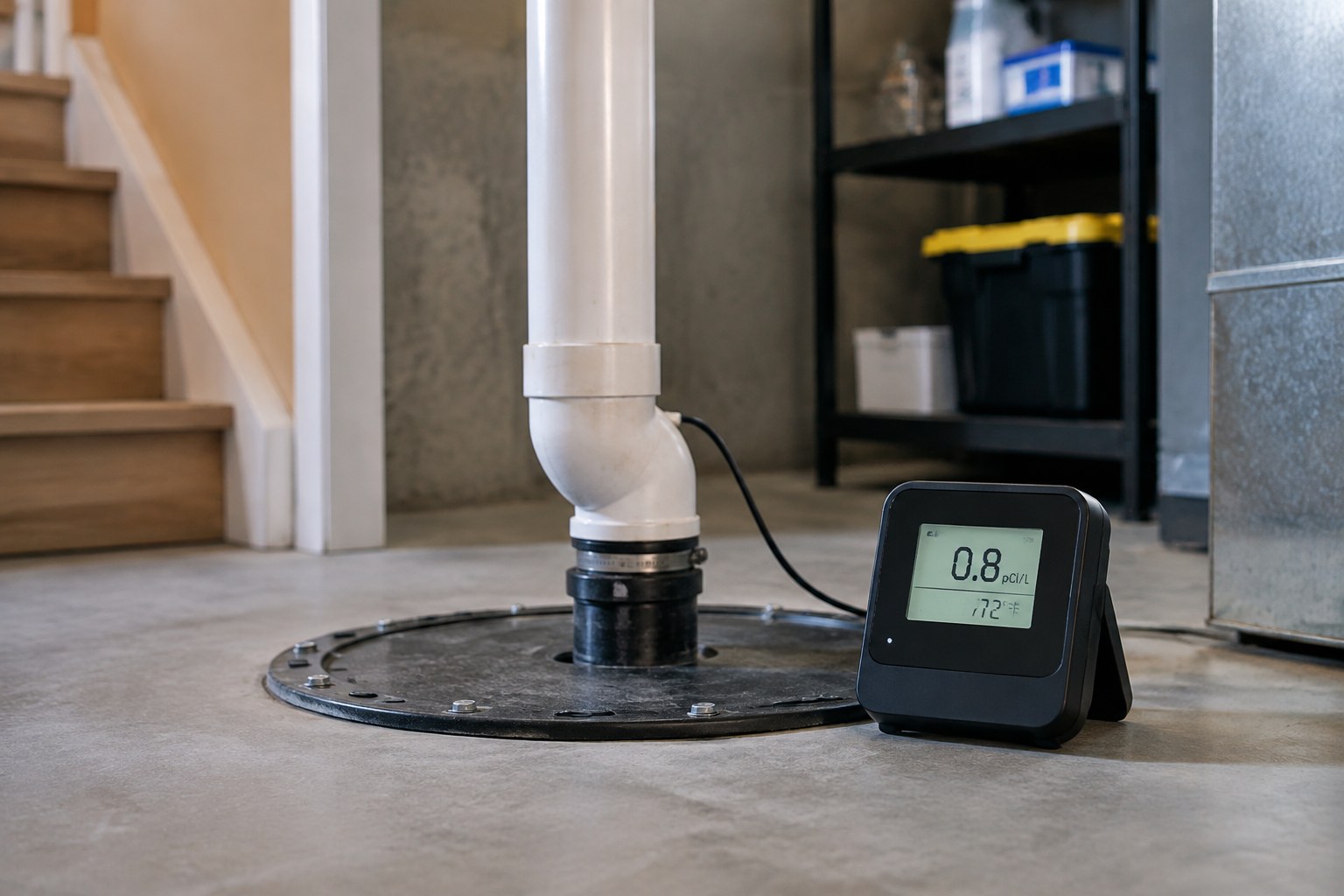
Radon is an invisible, odorless radioactive gas that can enter a home from the soil beneath and around the foundation. Because radon cannot be detected by sight or smell, testing is the practical way to determine the radon level inside a home.
For Avondale homeowners, radon testing can provide useful information when buying a home, selling a home, finishing a basement, or simply evaluating the home you already own. Radon levels can vary significantly from one property to another, so a result from a neighboring home does not determine the radon level in your home. Before scheduling a radon test, here are some important questions to ask.
1. What type of radon test will be performed?
Ask what equipment will be used and how the testing process works. For a typical short-term residential radon test, the testing period should be at least 48 hours. Continuous radon monitors can collect measurements throughout the testing period and provide information that helps evaluate the test conditions and overall result.
Long-term radon testing is also available and measures radon over a much longer period. This type of testing can provide information about average radon exposure over changing conditions and seasons, but it is generally different from the short-term testing commonly performed during a real estate transaction.
Regardless of the testing method, the person performing the test should be able to explain the equipment, required testing period, placement of the device, testing conditions, and how the final result will be reported.
2. Where will the radon monitor be placed?
Placement of the radon monitor is important. The device is generally placed in the lowest level of the home that is suitable for occupancy. Depending on the home's layout, this could be a basement, finished lower level, or the lowest regularly occupied floor.
The monitor should be positioned in an appropriate location away from conditions that could interfere with the test, such as drafts, open windows or exterior doors, direct sunlight, excessive heat, excessive humidity, or locations where the device could easily be disturbed.
Homes with split levels, partially finished basements, additions, or unusual layouts may require additional consideration when selecting the testing location. The tester should evaluate the home's configuration and select an appropriate location for the monitor.
3. What should we do before and during the radon test?
Short-term radon testing generally requires closed-house conditions. The tester should provide instructions explaining what occupants should and should not do before and during the testing period.
Exterior windows and doors should generally remain closed except for normal entry and exit. The home's normal heating and cooling systems can typically continue operating as instructed by the testing professional. Occupants should not move, cover, unplug, or otherwise interfere with the radon monitor.
If something unusual occurs during the test, such as a window being left open for an extended period, major construction activity, severe weather, or someone moving the monitor, the tester should be informed. These conditions can be considered when determining whether the test remained valid or whether additional testing may be appropriate.
4. How will the radon result be reported?
Radon concentrations in the United States are commonly reported in picocuries per liter, abbreviated pCi/L. The final report should clearly identify the measured radon concentration and provide enough information for the homeowner or buyer to understand the result.
The U.S. Environmental Protection Agency has established an action level of 4.0 pCi/L. When a radon result is at or above 4.0 pCi/L, the EPA recommends taking action to reduce the radon level. The EPA also notes that homeowners may consider reducing radon levels when results fall between 2.0 and 4.0 pCi/L.
A radon measurement represents the conditions during the testing period. Radon levels can fluctuate over time because of weather, seasonal changes, soil conditions, ventilation, pressure differences, and changes to the home. For that reason, a single test should not be interpreted as a guarantee that the home's radon level will always remain exactly the same.
5. What happens if the radon level is elevated?
An elevated radon result does not mean the home cannot be occupied or purchased. It means the condition should be evaluated and appropriate follow-up steps considered.
Depending on the result and the circumstances of the test, additional testing may be recommended. If mitigation is appropriate, a qualified radon mitigation professional can evaluate the property and determine the appropriate mitigation system for the home's construction and foundation configuration.
Many residential radon mitigation systems use piping and a continuously operating fan to draw radon-containing soil gas from beneath the home and discharge it outdoors. The exact design depends on the home's foundation, crawl space or basement configuration, and other site conditions.
After a radon mitigation system is installed, the home should be tested again to verify that the system has reduced the radon concentration. Homeowners should also understand how to monitor the system and when future radon testing is recommended.
6. Is radon testing included with a standard home inspection?
A standard visual home inspection does not determine the radon concentration inside a home. Radon testing is a separate service that requires specialized testing equipment and a defined testing period.
During a home inspection, an inspector may observe foundation openings, sump pits, crawl spaces, basement conditions, or other components associated with the lower portions of the home, but those observations cannot determine whether an elevated radon level is present.
For buyers, radon testing can often be coordinated with the home inspection so the testing period occurs during the real estate inspection process. Homeowners can also schedule radon testing independently at any time.
Homeowners and buyers who want additional information can review Metro One Home Inspection's Avondale radon testing services to learn more about testing options for homes in Avondale, Missouri.
7. Can I rely on a previous radon test?
A previous radon test can provide useful information about the property, but it may not represent current conditions. Radon levels can change, and changes to the home can affect how soil gases enter or move through the structure.
If a previous test is available, review the complete report rather than relying only on the reported number. Consider when the test was performed, where the testing device was located, how long the test lasted, and whether the home has changed since the test.
Foundation repairs, basement finishing, additions, changes to heating or ventilation systems, installation of a radon mitigation system, or other modifications may be reasons to perform another test. A buyer may also choose to perform an independent radon test as part of the inspection process even when an older test result is available.
8. Should a home be tested again in the future?
Radon testing should not necessarily be viewed as a one-time event for the life of a property. Because conditions can change, homeowners may choose to test periodically and after significant changes to the home.
Additional testing can be particularly useful after major foundation work, basement remodeling, changes to the home's ventilation, or installation of a radon mitigation system. Testing may also be appropriate when a previously unused lower level becomes regularly occupied.
Make Radon Testing Part of Informed Homeownership
Radon testing provides information about a condition that cannot be identified through a normal visual inspection. A properly performed test can help Avondale homeowners and buyers better understand the radon level in a property and determine whether additional testing or mitigation should be considered.
Before the test begins, make sure you understand where the monitor will be placed, how long the test will run, what conditions need to be maintained, and how the results will be reported. Following the testing instructions and understanding the final result will help you make informed decisions about the home.


Comments
Post a Comment